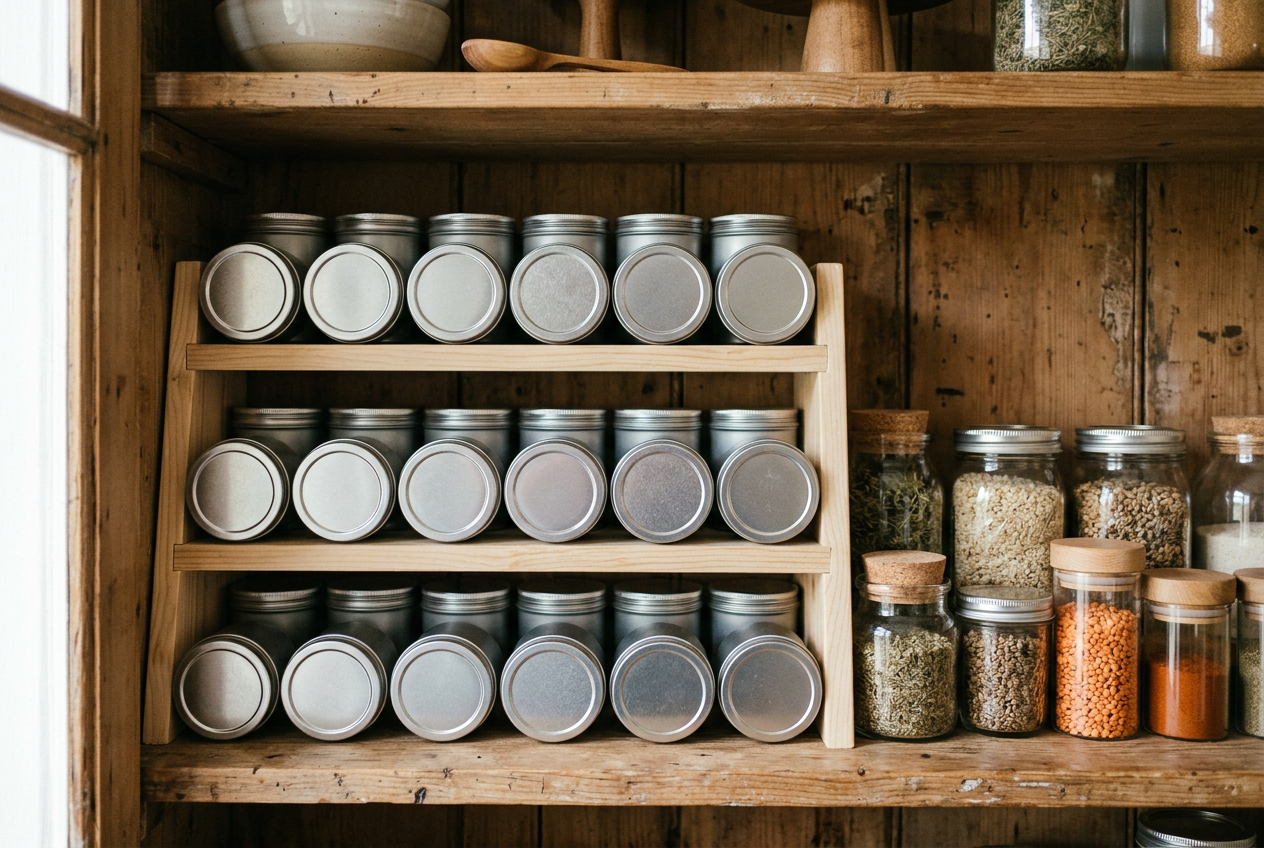
4. Tier the tins and jars so every label faces out
Tins are the classic cupboard failure. They stack into blocks where only the front row is legible, and because they last for years, the ones at the back stay there for years.
A three-step tiered riser solves it completely. Each row sits higher than the one in front, so every label is readable from the door in a single look. A riser costs $12 to $20, CA$18 to CA$28 or £10 to £16, and one per shelf is usually enough. Metal or sturdy plastic; the very cheap flexible ones bow under a full load of tins.
Group by type rather than by brand or size — tomatoes together, pulses together, fish together, soups together. Grouping is what lets you see at a glance that you have six tins of tomatoes and no beans, which is the information that changes what goes on the shopping list.
For jars and sauces, use a small turntable in a corner or a deep shelf. A 30 cm lazy Susan turns an unreachable corner into fully accessible storage and costs about $15. Put the tallest items at the back edge so they do not block the spin.
Deep shelves without risers benefit from a pull-out bin instead: a shallow plastic or wire basket that holds one category and comes out in one movement, so the back of it is reachable without unloading the front. Label the end that faces out.
Rotate whenever you unpack shopping. New tins to the back, existing ones forward. It costs ninety seconds and is why supermarkets never have a forgotten back row.